When does a tooth actually need a crown?
A crown is a restorative option, not a cosmetic upgrade. It's recommended when a tooth can no longer function reliably with a filling alone. Common situations include:
- A large area of decay that leaves too little natural tooth to support a filling
- A tooth that has cracked and needs to be held together to prevent the crack from spreading
- A tooth that has had a root canal and is now more brittle than a healthy tooth
- A worn-down tooth that has lost significant height
- A failing or fractured old filling covering most of the tooth
- A tooth being used as an anchor for a bridge
We don't recommend crowns for teeth that can be reasonably managed with a filling. If we suggest a crown, we'll explain exactly why.
What materials are used?
Modern crowns are typically made from porcelain fused to metal, all-ceramic, or zirconia. The material we recommend depends on the tooth's location, the forces it absorbs, and your aesthetic preferences.
- Zirconia is our most common recommendation for back teeth, it's extremely durable, doesn't flex under heavy chewing, and looks natural
- All-ceramic or lithium disilicate (e.g. e.max) is often used for front teeth where appearance is the priority
- Porcelain-fused-to-metal is still a solid option in certain situations, particularly where an existing metal framework is present
We'll walk you through the choice at your preparation appointment.
What does the two-visit process look like?
Preparation appointment
We numb the tooth and reshape it to accommodate the crown. Impressions or a digital scan are taken and sent to the lab. A temporary crown is made and cemented in place to protect the tooth while your permanent crown is fabricated, usually one to two weeks.
Fitting appointment
The temporary comes off, the permanent crown is tried in and assessed for fit, colour match, and bite. Once everything looks right, we cement it permanently. Small adjustments to the bite can be made at this visit.
What is a dental bridge?
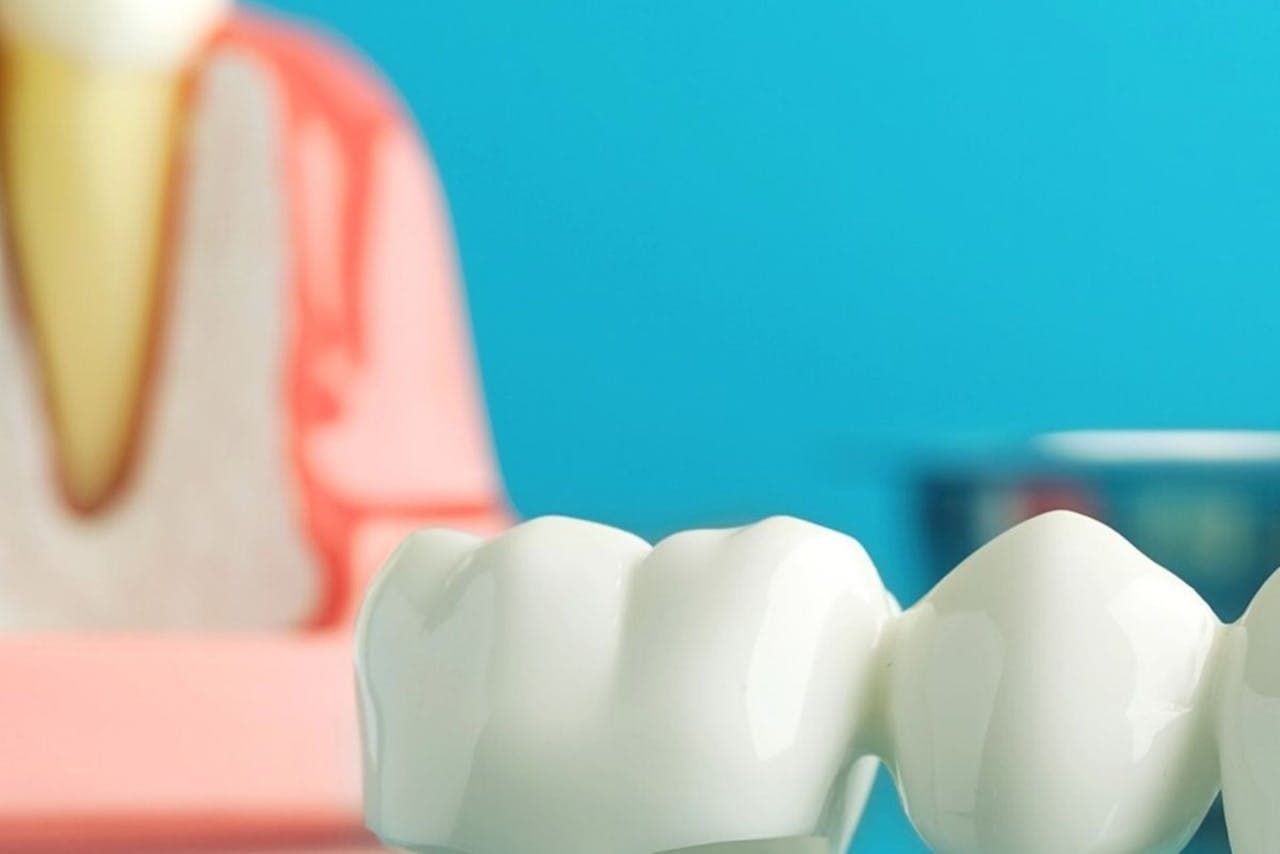
A bridge is a fixed restoration that replaces one or more missing teeth. It works by using the teeth on either side of the gap as anchors, these are prepared and fitted with crowns, and the replacement tooth (or teeth) spans between them as a single unit.
Bridges are a good solution when:
- The neighbouring teeth already need crowns for other reasons
- You prefer a fixed, non-removable option without an implant procedure
- An implant isn't feasible for anatomical or medical reasons
The trade-off is that healthy teeth on either side need to be reduced to hold the bridge. For that reason, if the adjacent teeth are sound, we often discuss implants as an alternative that leaves those teeth untouched.
Caring for your crown or bridge
A crown or bridge can't get a cavity itself, but the tooth underneath a crown can, at the margin where the crown meets the gumline. Brushing, flossing, and keeping your regular hygiene appointments protect that junction. For bridges, using a floss threader or water flosser to clean under the pontic (the replacement tooth) is important and takes only an extra minute each day.
What about teeth that need a root canal before a crown?
Teeth that have had a root canal are typically more brittle than living teeth, because the internal pulp tissue that helped keep them hydrated is no longer there. A crown after root canal treatment is often the right next step, covers and protects the tooth from fracture. We'll tell you when it's recommended and why.
Ready to book? We're happy to take a look, explain your options, and plan a timeline that works for you.