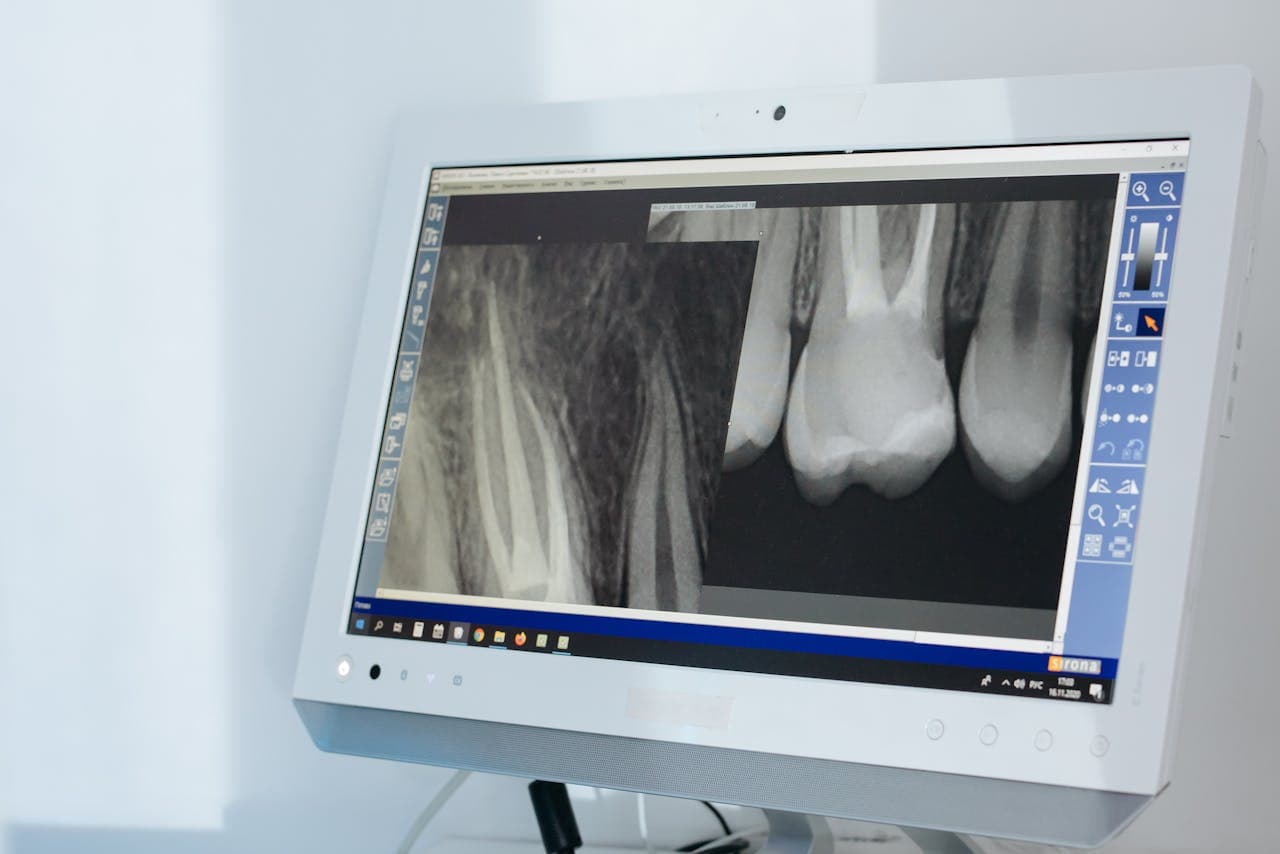
What actually happens inside a tooth that needs a root canal?
Every tooth has a hollow space at its core called the pulp chamber, which runs down through the roots as narrow canals. The pulp contains nerves, blood vessels, and connective tissue, it's what gives a tooth sensitivity and helps it develop during childhood. Once a tooth is fully formed, the pulp is no longer essential to the tooth's function.
When bacteria reach the pulp (through a cavity that's gone deep, a crack, or an old filling that's allowed leakage) the tissue inside can become infected or severely inflamed. The infection can spread through the root tips into the surrounding bone if left untreated.
Root canal therapy removes the affected pulp tissue, cleans and shapes the canals, and seals the tooth so bacteria can't re-enter. The tooth remains in place and functional. The procedure addresses the source of the infection rather than simply treating the symptoms.
Signs you may need root canal therapy
Root canal issues don't always announce themselves loudly. Signs worth having evaluated include:
- A toothache that lingers for more than a few seconds after contact with hot or cold
- Spontaneous pain with no obvious trigger, pain that wakes you up or comes on unprompted
- Swelling in the gum near a tooth, or a small pimple-like bump on the gum (a sinus tract)
- Significant sensitivity to pressure or biting
- A tooth that has recently been very painful but has now gone quiet (sometimes a sign the nerve has died)
- Discolouration of a single tooth compared to its neighbours
Not all of these symptoms confirm a root canal is needed, some overlap with other conditions. A clinical exam and X-rays are the only way to know for certain. If you're experiencing any of these, it's worth getting looked at promptly, particularly if there's swelling involved. Our emergency dentistry page covers how to reach us quickly.
What the appointment actually looks like
Anaesthetic and access
We numb the tooth and the surrounding area thoroughly, this is the most important step, and we take the time to make sure it's effective before we begin. We then create a small opening in the top of the tooth to access the pulp chamber.
Canal cleaning and shaping
Using small, flexible files, we clean out the infected or inflamed pulp tissue from each canal and shape them to receive a filling material. The canals are rinsed with an antimicrobial solution throughout.
Sealing the tooth
The cleaned canals are filled with a rubber-like material called gutta-percha and sealed. A temporary or permanent filling is placed in the access opening.
Crown, usually the next step
At a separate appointment, a crown is typically placed over the tooth to restore its shape and protect it from fracture. We'll discuss timing and coordinate this as part of your care plan.
The discomfort is in the toothache: not the treatment
This is worth saying plainly, because the fear of root canal treatment stops some patients from seeking care until their infection has become much more serious. The procedure is carried out under local anaesthetic. The sensation during treatment is pressure and vibration, not pain. Most patients tell us it was much less eventful than they anticipated.
The days immediately before a root canal (when the infection is active and the tooth is acutely painful) are the genuinely uncomfortable part. The root canal resolves that.
After your root canal
Some tenderness around the tooth for one to three days after the procedure is normal, the tissues around the root tip were inflamed, and that takes a little time to settle. Mild over-the-counter pain relief is usually sufficient. Avoid chewing hard food on the treated side until your crown is placed.
If swelling increases significantly, you develop a fever, or the pain seems to be worsening rather than improving after 48 hours, contact us. These are uncommon after a root canal but worth reporting.
Once the tooth is fully restored with a crown, most patients go on to use that tooth normally for many years without further issues.
If you're in pain now and need to be seen soon, please reach out, we keep time in our schedule for situations like this.