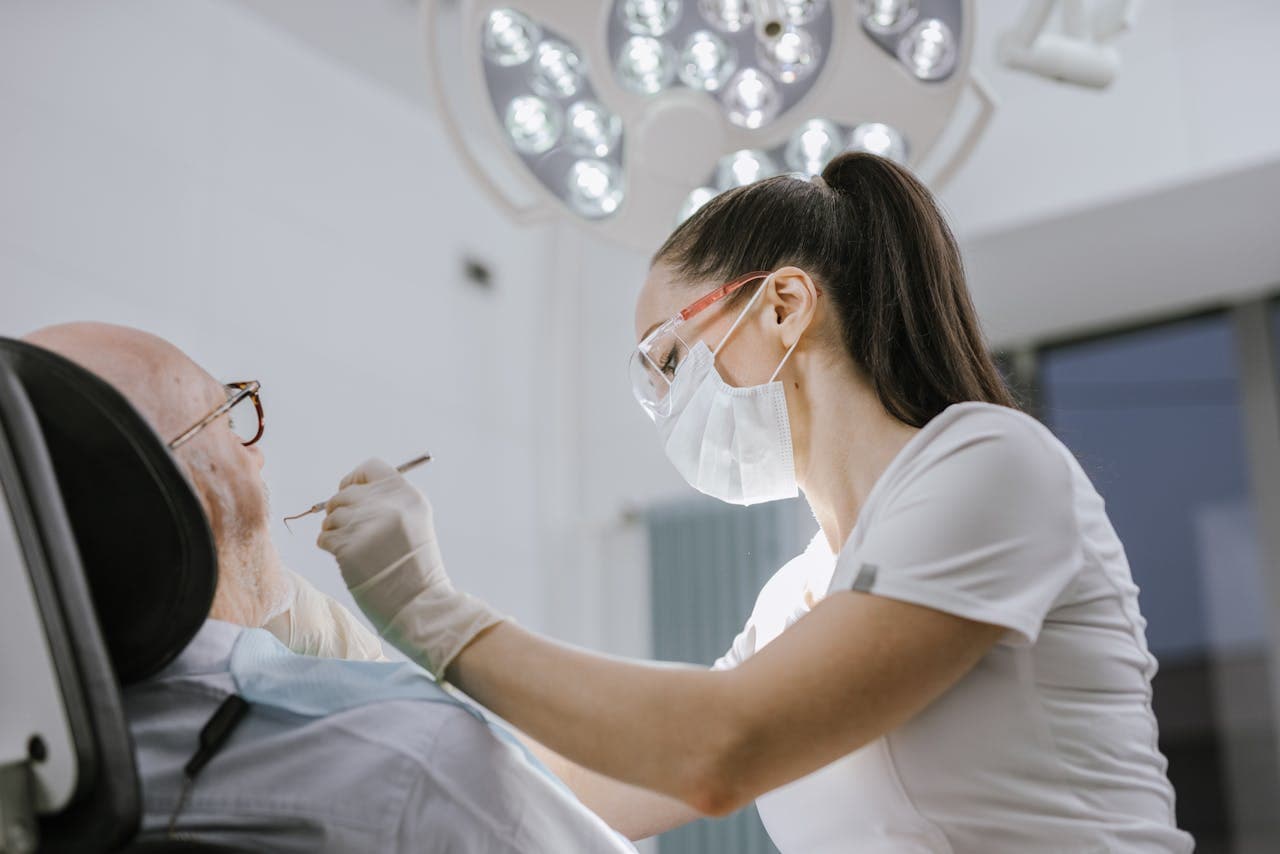
What's actually included in a routine visit?
A routine dental appointment has several moving parts that work together to give us a complete picture of your oral health.
Your visit usually includes:
- A clinical exam of every tooth, checking for decay, cracks, worn enamel, and bite issues
- Gum charting: measuring the space between your gums and teeth to detect early gum disease
- X-rays as clinically appropriate (not every visit, but regularly enough to catch changes in bone and between teeth)
- A professional cleaning to remove plaque and tartar buildup that daily brushing can't reach
- Oral cancer screening of the soft tissues in and around the mouth
- Oral hygiene coaching: personalised tips based on what we actually see in your mouth, not generic advice
The exam and cleaning often happen in the same appointment, but we'll let you know if we need more time.
Why prevention matters more than it sounds
There's a reason dental care is called preventive: the conditions we find and treat early (a small cavity, early gum inflammation, a cracked cusp) are much simpler and less expensive to address than the same conditions caught later. A root canal, a crown, or an extraction all typically start as something that a routine check-up could have caught while it was still a simple filling.
Regular care also gives us a running baseline. We can compare your X-rays year over year, track slow-moving changes in bone, and notice when something new has appeared. Without that baseline, we're always starting from scratch.
What happens if a filling is needed?
If we spot a cavity during your exam, we'll let you know where it is, how large it appears, and what we recommend. Small cavities are usually addressed with a direct composite (tooth-coloured) filling in a single appointment.
Here's what to expect:
- We numb the area with local anaesthetic, most patients feel only light pressure, not pain
- We remove the decayed tissue and clean the area
- Composite resin is placed in thin layers and hardened with a curing light
- We shape and polish the filling to fit your bite naturally
The whole process typically takes 30 to 60 minutes per tooth. You can eat normally once the anaesthetic wears off. For larger areas of decay, we may recommend a crown instead of a filling, we'll explain why if that comes up.
Gum health: the part many patients overlook
Gum disease is the leading cause of tooth loss in adults, and it's often silent in its early stages. Many patients have no pain, no obvious swelling, gradual bone loss happening below the gumline that we can detect on X-rays and through gum pocket measurements.
We take gum health seriously at every visit. If we notice signs of gingivitis or early periodontitis, we'll talk through what that means, what a treatment plan looks like, and how to adjust your home care to reverse the trend. Often it comes down to technique and consistency rather than anything complicated.
Oral hygiene instruction: actually useful advice
We don't hand you a pamphlet and call it done. At your cleaning, your hygienist will show you specifically where plaque is accumulating in your mouth and walk you through any adjustments to your brushing or flossing technique. That might mean switching to a softer brush, trying interdental brushes for tight contacts, or adjusting the angle of your toothbrush.
If you have a question about an electric toothbrush, a water flosser, a whitening product, or anything else you've seen advertised, ask. We'd rather you get a straight answer from us.
When should you come in outside of a routine visit?
You don't have to wait for your scheduled appointment if something feels wrong. Tooth pain, a chipped or cracked tooth, swelling, a loose filling, or anything sudden deserves a prompt look. Our page on emergency dentistry covers what we can help with on short notice.
Ready to schedule your next visit or book as a new patient? You can reach us through the new patients page or by phone.