What dental implants can replace
Implants are versatile enough to be used in nearly every kind of tooth loss. The most common situations we treat include:
- A single missing tooth, front or back
- Several missing teeth in a row
- A failed bridge that needs a long-term solution
- Loose or shifting partial dentures
- A full upper or lower arch supported by implants
- A tooth that has been broken below the gumline
What a modern dental implant actually is
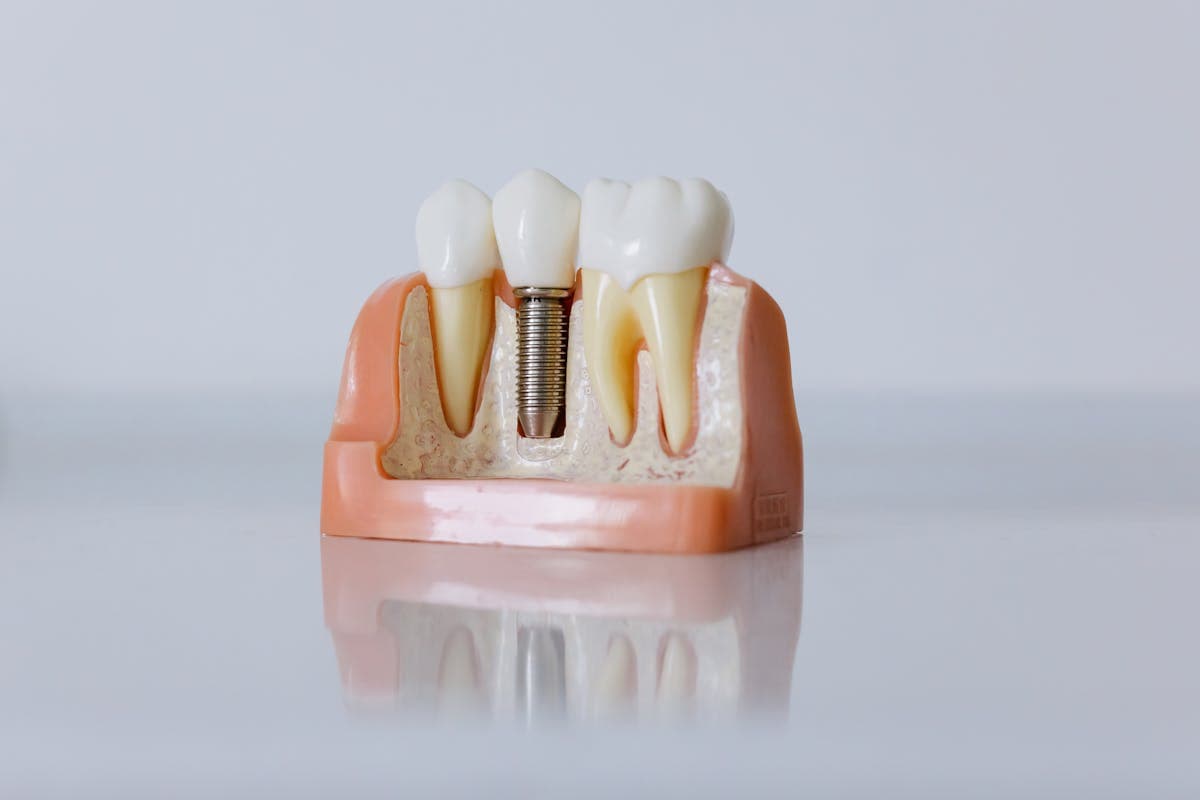
An implant has three parts that work together. The implant itself is a small titanium post placed inside the jawbone where the root of a tooth used to be. After your body integrates the post into the bone (usually over a few months) a small connector called an abutment is attached, and a custom crown is bonded on top.
The result is a single, fixed tooth that you brush and floss like your other teeth. There's nothing to take out at night and nothing to soak in a cup. Most patients tell us they forget which tooth was the implant within a few weeks.
How we approach your implant consultation
We don't rush the planning phase. This is a long-term solution, and it should be designed for your mouth, not someone else's. Here's how our consultations usually go:
An unhurried conversation
We start by listening. What's bothering you? What outcome would feel like a win? Are you considering implants because of how your mouth feels, how it looks, or both? This conversation shapes everything else.
A focused clinical exam
We examine the area where the implant would go, the neighbouring teeth, your bite, and the surrounding gum tissue. We also take any X-rays needed to understand the bone underneath.
A clear plan, in plain English
We walk through what we found and outline your options, including alternatives like a bridge or partial, so you can make an informed choice. If you'd like a second opinion, we'll support that fully.
A written estimate
We provide a personalized written estimate showing what's covered by your insurance and what isn't. Costs vary based on the case, so we don't list fixed prices, but we'll never start work before you understand exactly what to expect.
Treatment, then follow-up
Treatment is staged into short, comfortable appointments. Once your crown is placed, we see you back periodically to make sure everything is settling in well and to keep both the implant and the rest of your mouth healthy.
Caring for an implant after it's placed
The implant itself can't get a cavity, but the gum around it still needs daily care. Brushing twice a day, flossing or using interdental brushes around the implant, and coming in for your regular cleanings are usually enough to keep things healthy for the long term. We'll show you exactly how to clean around your implant the first time you come in after treatment.
What about alternatives: bridges and dentures?
Implants are often the most natural-looking, longest-lasting solution, but they're not the only option. A traditional bridge can be a good fit when the teeth on either side already need crowns. A partial or full denture, especially one stabilized by implants, can also be the right answer depending on your situation. If you're weighing your options, our pages on crowns and bridges, dentures, and the new patient experience may also be helpful.
Common reasons patients come to us for implants
People come in for an implant consultation for all kinds of reasons:
- A tooth that broke below the gum and can't be saved
- A long-missing tooth that's now starting to affect chewing or shifting
- A loose denture that's making everyday life harder than it should be
- A failing bridge or old restoration that needs a long-term plan
- Simply wanting to feel confident smiling again
Whatever brings you in, we'll meet you where you are.
Ready to talk through your options?
Book a consultation any time and we'll listen, look, and help you decide what makes sense for your mouth, your timeline, and your budget. If you have questions before booking, you can always reach out by phone or email.